California Energy Code
Clean energy transition

California Energy Code Development and Technology Research

Frontier contributes to the development and implementation of Title 20 standards for commercial foodservice equipment and Title 24 residential energy efficiency standards. We also conduct extensive lab and field research on innovative energy technologies and integrated design practices that may be adopted in future code cycles, and on zero-net energy demonstration projects. Our work is fuel agnostic and seeks to find the best methods for all-electric and mixed-fuel buildings. Our experience with understanding how new technologies perform in real-world applications informs our policy and program work.

Project Lead

Alea German photo
Vice President
Alea German
Approach

State of California codes include Title 20 for appliance efficiency regulations and Title 24 for building energy efficiency standards. California’s Title 24, which is more stringent than nationally recognized model codes, such as the International Energy Conservation Code (IECC), is updated every three years and is currently approaching zero-net energy. Frontier contributes to the development and implementation of Title 20 standards for commercial foodservice equipment and Title 24 residential and commercial energy efficiency standards. We also conduct extensive lab and field research on innovative energy technologies and integrated design practices that may be adopted in future code cycles, and on zero-net energy demonstration projects. Our work is fuel agnostic and seeks to find the most cost-effective measures to save energy for all-electric and mixed-fuel buildings. Our experience with understanding how new technologies perform in real-world applications informs our policy and program work.

Frontier Energy:
  • Models energy use by all-electric and mixed-fuel single family and low-rise multifamily residences, and analyzes the cost-effectiveness of proposed code changes.
  • Models energy use by new and cutting-edge mechanical systems and appliances to determine their load impact.
  • Evaluates technologies such as hydronic radiant ceiling panels, heat pump water heaters, and foodservice appliances to determine their performance, cost-effectiveness, and reliability in laboratory and field test settings.
  • Designs, installs, and analyzes real-world use of energy systems in ZNE demonstration projects, including affordable multifamily buildings.
  • Assesses opportunities and barriers in Title 24 for the installation of electric heating equipment and appliances.
  • Conducts cost-effectiveness studies for cities and counties considering local ordinances requiring efficiency beyond Title 24, generally referred to as “reach” codes.
  • Writes energy code and appliance standard language for statewide adoption.

Project PDF's

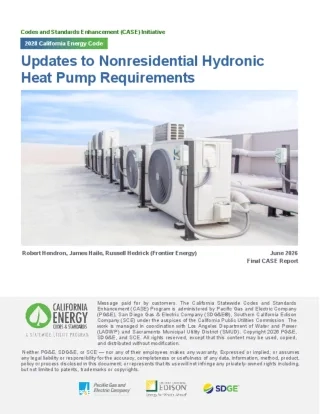
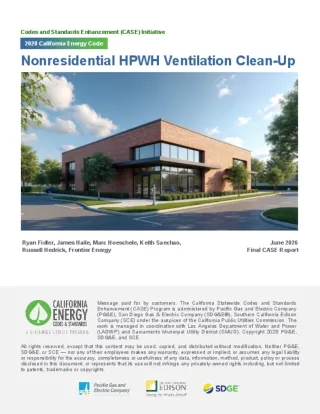
Document
2028_CASE-Report-NR-HPWH-Ventilation-Clean-Up-Final.pdf
Document
2028_Final-CASE-Report-_-NR-Enhanced-AWHP-Performance.pdf

Project Team

Photo of David Zabrowski
Vice President Process Decarbonization and Evaulation & Validation
David Zabrowski
Photo of Simon Pallin
Simon Pallin
Photo of James Haile
James Haile
Photo of Ada Shen
Ada Shen